
Dental Implants
Replace What Your Smile Is Missing
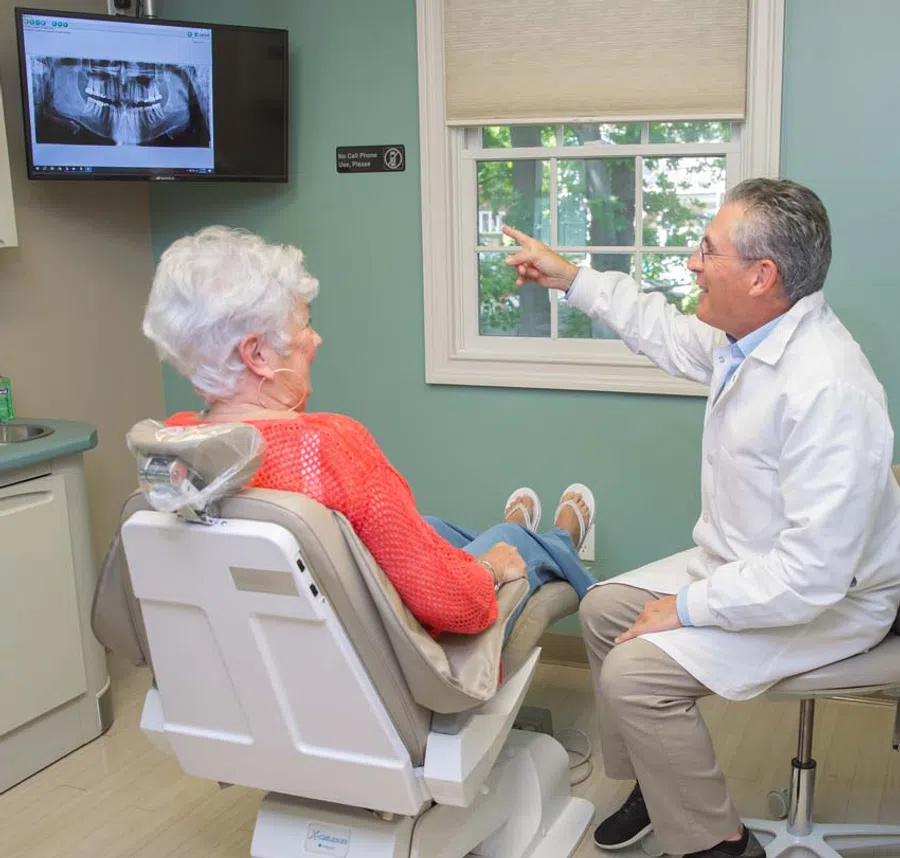
Gain a Stronger Bite Using Dental Implants in East Lyme
Dental implants in East Lyme can rebuild your bite from the root up. You no longer have to live with missing teeth. Replacing gaps in your bite will make chewing easier and speaking feel more natural. You can enjoy your favorite foods again and show off a full smile in photos.
Whether you're missing one tooth or an entire arch, dental implants replace the root of your tooth. When paired with a custom restoration, implants can restore your smile's full function and appearance.
They also support your jawbone, similar to natural tooth roots. This helps you avoid the bone loss that occurs with missing teeth or denture wear.
Choose the Ideal Implant Solution for Your Smile
When you get implants, you want a team you can trust with every part of the process. At East Lyme Family & Cosmetic Dentistry, your dentist handles everything, from surgical placement to attaching your final restoration. Both Dr. Palumbo and Dr. Yousuf have earned a Fellowship from the International Congress of Oral Implantologists, a credential that reflects serious, ongoing expertise in implant dentistry.
We have implant options for your needs:
- Implant Crown - This option replaces a single missing tooth. The durable titanium post serves as the foundation for a crown. We craft your crown in-house for same-day placement, if possible. It will look, feel, and function like a regular tooth.
- Implant Bridge - An implant bridge replaces several missing teeth in a row. It's a secure solution that won't rely on your natural teeth for support. No healthy teeth are altered to anchor your restoration. You'll get a stable, complete smile.
- Implant Dentures - Secure your dentures to implants for a stable, slip-free fit. You can enjoy more of the foods you love. You have the option of keeping your dentures removable or fixed in place, similar to real teeth. Unlike traditional dentures, implant dentures help protect your jawbone from bone loss.
- All-on-4 Treatment - This approach restores a full arch of teeth using as few as four precisely placed implants. You'll benefit from a faster process and shorter healing time compared to other full-arch solutions. It delivers an efficient result without unnecessary delays.
- Full-Mouth Reconstruction - A full-mouth restoration can address multiple dental concerns at once. We'll create a personalized plan tailored to your needs. This may include replacing teeth, treating infections, and addressing damage throughout your mouth.
Find Everything You Need for Implants, From Surgery to Sedation
If bone loss has occurred, your dentist may recommend bone grafting to strengthen the area. We can also remove teeth to make room for implants, if needed. From there, computer-guided technology helps plan the precise placement of your implant. Every detail is mapped out before treatment even begins
If anxiety is a concern, laughing gas or an oral sedative can help you relax. We also have cozy amenities, such as pillows and blankets, to keep you comfortable during your visit.
Start your journey with a consultation to discuss dental implants in East Lyme.
Common Questions About Dental Implants
Q Who is a good candidate for dental implants?
Most patients with good overall oral health and sufficient jawbone density are good candidates for implants. You'll find out if you are a good candidate during a consultation. If bone loss has occurred, procedures like bone grafting can help prepare the area for a successful implant. Your dentist will determine the right treatment path for your needs.
Q How long does the dental implant process take?
The dental implant process typically spans several months. Your jawbone needs time to heal and fuse with the implant post. The exact timeline depends on factors such as your bone health and the type of restoration. While it takes patience, the result is a long-lasting, secure replacement tooth.
Q Is it painful to get dental implants?
Getting dental implants is not painful. You'll experience minimal discomfort during and after implant placement, especially with sedation options available. Your dentist numbs the area during surgery. Laughing gas or oral sedation is available for added comfort. Any soreness afterward is typically manageable and temporary.
Q What's the difference between an implant crown and an implant bridge?
The difference between an implant crown and an implant bridge is how many teeth they replace. An implant crown replaces a single missing tooth with a single implant supporting a crown restoration. An implant bridge replaces several consecutive teeth, anchored by one or more implants. Both restore function and a natural appearance.
Q Can implants help prevent bone loss in your jaw?
Dental implants can prevent bone loss in your jaw. They do so by mimicking the function of a natural tooth root. This stimulation helps prevent the bone loss that often occurs after tooth loss. Traditional dentures don't offer this same benefit. It's one reason many patients choose implants instead.
Q Do you need to see a specialist for dental implants?
You don't always need to see a specialist for dental implants. While some offices handle only the restoration, others can place both the implant and restoration. Visiting a dental team that handles every step of the implant process in-house keeps things simple for you. You won't need to coordinate between multiple offices or specialists.
Q Can implants replace multiple missing teeth?
Dental implants can replace a single missing tooth or a full arch, depending on your needs. Options range from a single-implant crown to full-arch solutions like All-on-4 or a implant dentures. Your dentist will recommend the right approach based on how many teeth you're missing. This flexibility makes implants a solution for a wide range of situations.
Q Can you get a dental implant if you have weak bone density?
If you have weak bone density, that doesn't automatically rule out dental implants. Your dentist can often recommend bone grafting to rebuild the area before placing your implant. This extra step adds some time to your treatment. However, it helps ensure a stable, long-lasting result.